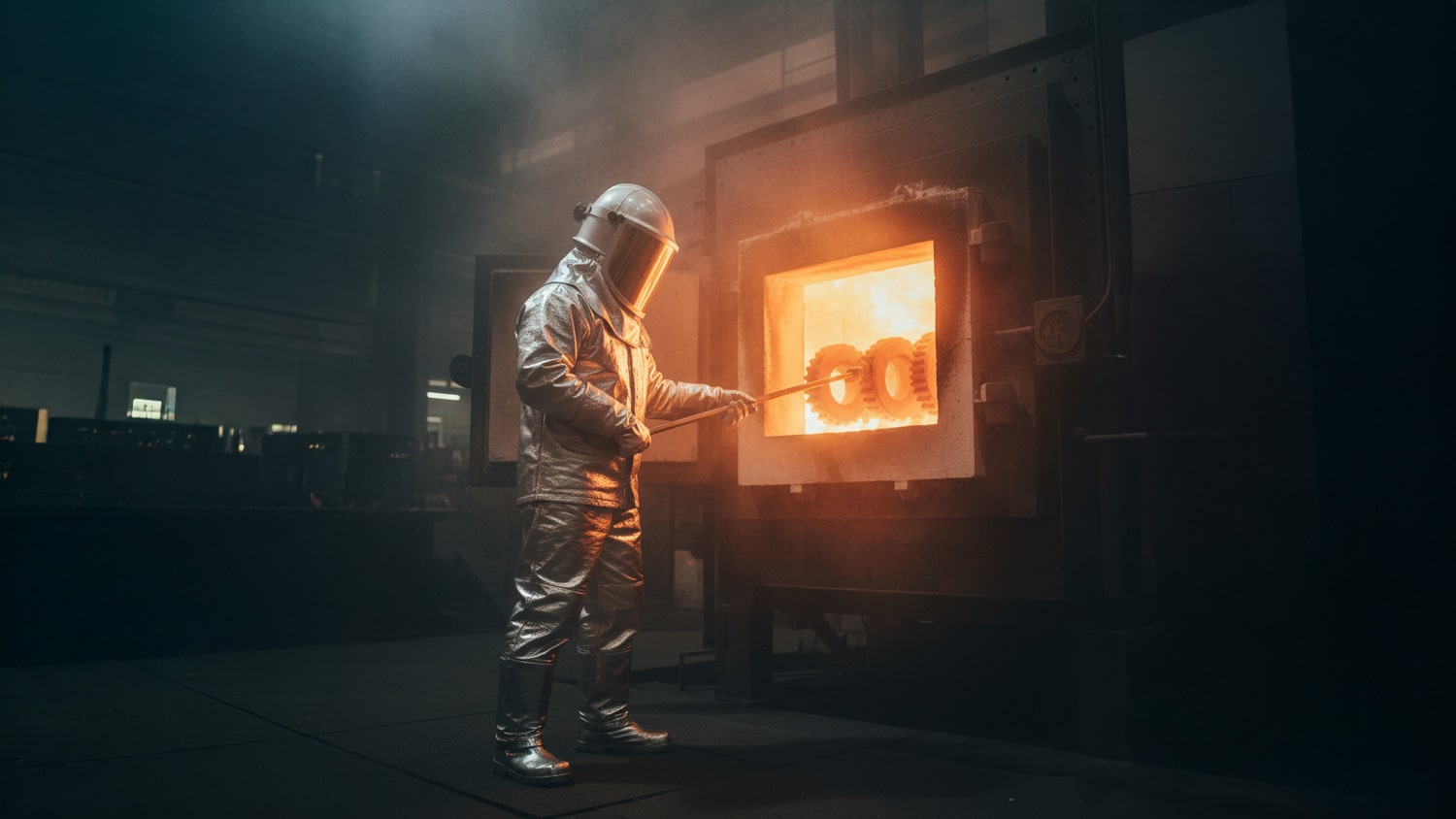
Melting is the transformation phase where raw scrap becomes a precise engineering alloy. This stage defines the mechanical properties of the final part, such as hardness, tensile strength, and durability. Using advanced Medium Frequency Induction Furnaces, we ensure a clean melt with uniform temperature distribution. Strict metallurgical control via Quantometry (Spectroscopy) guarantees that the chemical composition matches the required standard before pouring begins.

Using advanced melting systems and controlled metallurgical parameters, we convert raw scrap and alloys into a stable molten charge ready for precise pouring. From charge selection and temperature regulation to alloying adjustments and slag removal, every stage is engineered to ensure consistency, purity, and the structural integrity required for defect-free casting.

Each workflow illustrates the essential stages that transform raw concepts into fully engineered, production-ready components—ensuring precision, repeatability, and quality at every step.
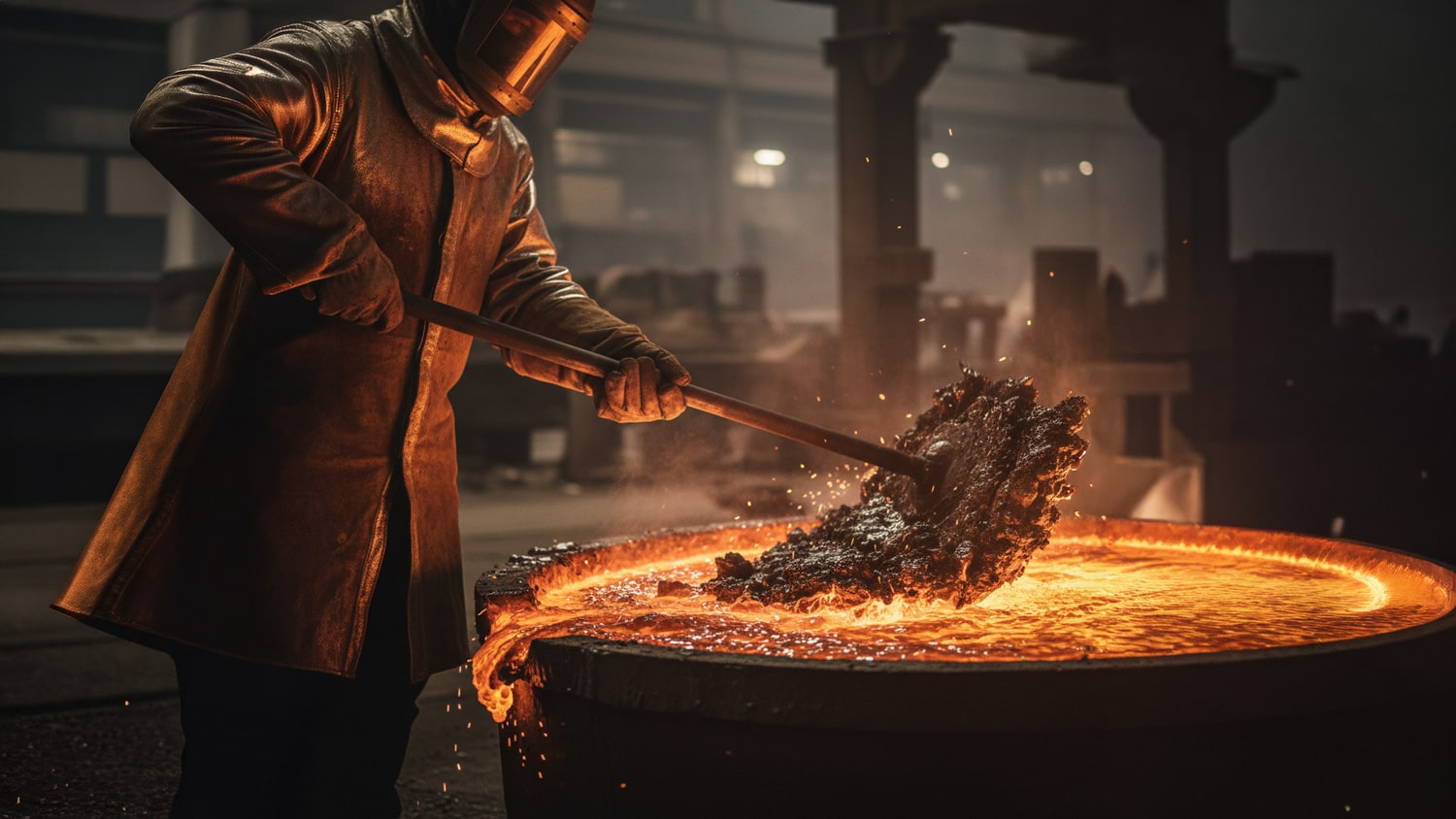
The process starts with charging the induction furnace with carefully selected steel scrap, returns (gates and risers), and ferroalloys. Induction technology uses electromagnetic fields to generate heat directly within the metal, ensuring rapid melting and self-stirring of the bath, which is crucial for achieving a homogenous alloy mixture.
We don’t guess; we measure. Before tapping, a small sample of the molten metal is taken and analyzed using a Quantometer (Optical Emission Spectrometer). This device measures the exact percentage of Carbon, Manganese, Chromium, and other elements in seconds. If adjustments are needed, ferroalloys are added to bring the chemistry within strict tolerance limits.
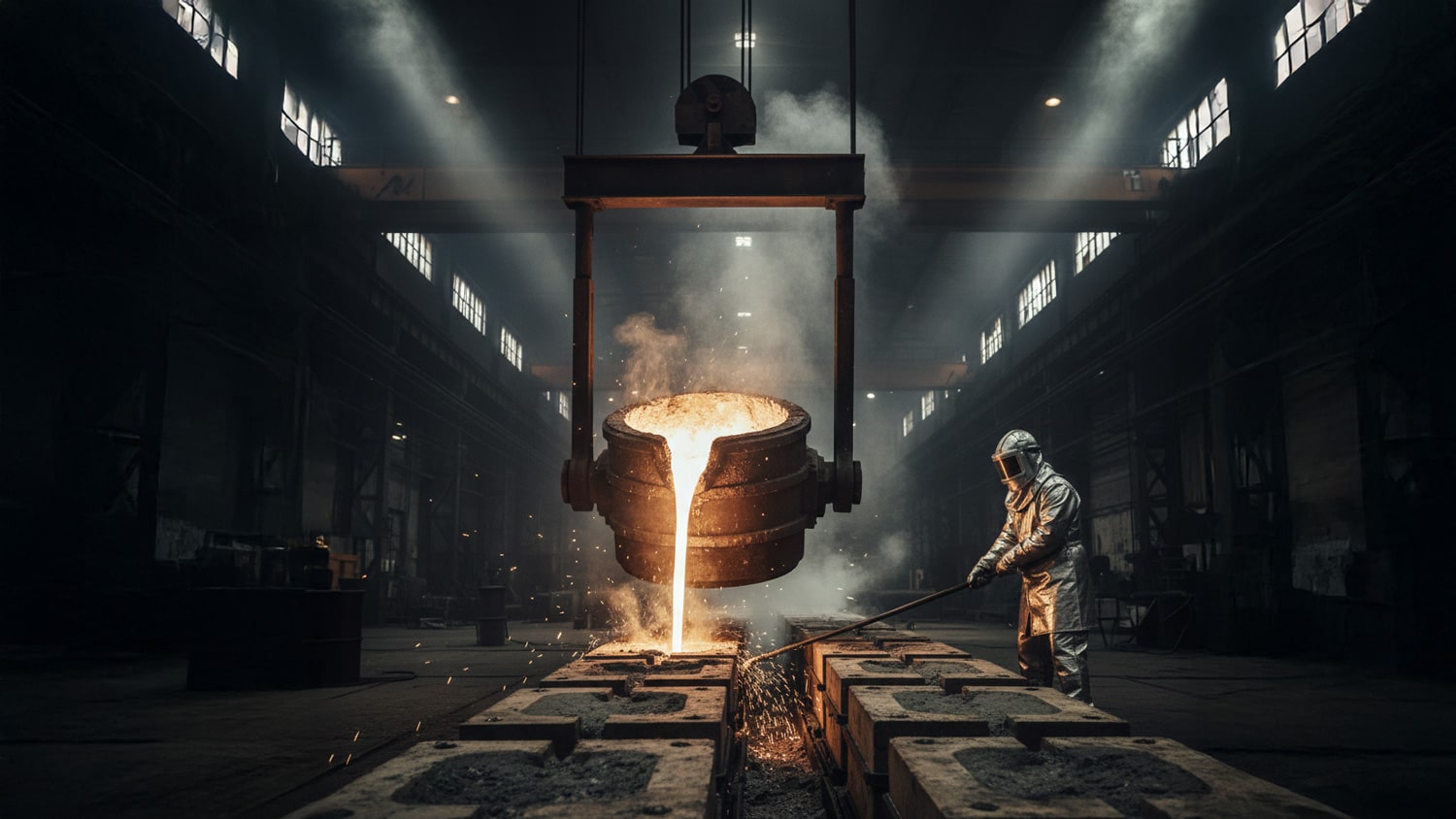
Once the temperature and chemistry are approved, the furnace tilts to tap the metal into a pre-heated ladle. Slag (impurities floating on top) is carefully removed. The metal is then transported to the molding line and poured. The pouring temperature and speed are critical; if too cold, the metal won’t fill the mold; if too hot, it creates defects.
Our FAQ section highlights essential technical insights to help you better understand each casting method, material requirement, and process specification before moving into full-scale production